



Trump vs. The Federal Reserve: What’s Behind the Clash and Why Investors Should Pay Attention
1/14/20263 min read

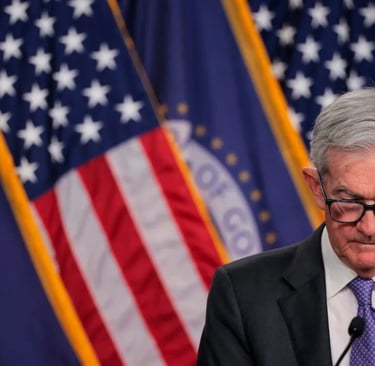
In early 2026, tensions resurfaced between former President Donald Trump and the leadership of the Federal Reserve, reigniting a long-standing debate about central bank independence in the United States.
While political disagreements with the Fed are not new, public confrontations at this level tend to draw attention from investors, economists, and global markets. Understanding what is at stake goes beyond politics. It directly affects expectations around interest rates, inflation, and market stability.
This article breaks down the origins of the conflict and explores what it could mean for American investments.
The Role of the Federal Reserve in the U.S. Economy
The Federal Reserve, often referred to simply as “the Fed,” is responsible for managing monetary policy in the United States. Its main goals are to maintain price stability, support maximum employment, and preserve financial stability.
To achieve this, the Fed adjusts interest rates, controls liquidity in the financial system, and acts as a lender of last resort during crises. Crucially, it operates with institutional independence, meaning its decisions are designed to be insulated from political pressure.
This independence is widely viewed as a cornerstone of economic credibility.
Why the Conflict Emerged Again in 2026
Donald Trump has historically criticized the Federal Reserve, particularly when its policies conflict with his preferred economic stance. The renewed clash in 2026 centers on disagreements over interest rate policy and the pace of monetary easing.
From Trump’s perspective, tighter monetary conditions can slow economic growth and weaken political narratives around economic performance. From the Fed’s standpoint, maintaining control over inflation and avoiding financial imbalances remains the priority.
The friction reflects a deeper tension between short-term political objectives and long-term monetary discipline.
Why Central Bank Independence Matters to Markets
For investors, the most important issue is not the political dispute itself, but what it signals.
Markets rely heavily on confidence that the Federal Reserve will:
Make data-driven decisions
Resist political interference
Act predictably in times of stress
When investors begin to question that independence, risk premiums tend to rise. This can affect asset prices even before any policy changes actually occur.
Historically, periods where central bank credibility is questioned often lead to:
Higher market volatility
Currency fluctuations
Increased uncertainty in bond markets
Potential Impacts on U.S. Investments
While no immediate policy shift is guaranteed, investors should understand the possible channels of impact.
Interest Rates and Bonds
If political pressure were perceived to influence rate decisions, long-term Treasury yields could rise as investors demand higher compensation for uncertainty. This would affect:
Government bonds
Mortgage rates
Corporate borrowing costs
Equities
Stock markets may react unevenly. Growth stocks tend to be more sensitive to interest rate expectations, while defensive sectors often benefit during periods of policy uncertainty.
Increased volatility is a common short-term outcome when institutional independence is questioned.
The U.S. Dollar
Confidence in the Federal Reserve plays a key role in the dollar’s global strength. Any perception of weakened autonomy could lead to short-term currency swings, particularly against other major currencies.
Is This a New Risk or a Familiar One?
It is important to keep perspective. Political criticism of the Fed has occurred under multiple administrations, across parties, and over decades.
What matters is whether rhetoric turns into institutional change. So far, the Federal Reserve’s legal framework and operational independence remain intact.
For investors, this suggests caution rather than alarm.
How Investors Can Respond
Rather than reacting emotionally to headlines, investors may consider:
Maintaining diversified portfolios
Monitoring interest rate expectations rather than political statements
Paying attention to official Fed communications and economic data
Periods of uncertainty often reward discipline and long-term thinking more than short-term speculation.
Final Thoughts
The renewed dispute between Donald Trump and the Federal Reserve in 2026 highlights a recurring tension in modern economies: the balance between political influence and monetary independence.
For U.S. investors, the key takeaway is not the conflict itself, but how markets interpret its implications for policy credibility. As long as institutional frameworks remain strong, fundamentals tend to matter more than rhetoric.
Understanding these dynamics helps investors stay focused, informed, and prepared in an environment where politics and markets often intersect.
Finance
Join 5,000+ readers and get weekly money tips and investing insights for free
Growth
Trust
Practical guides for building wealth step by step
© 2025 SetInvestPro. All rights reserved.
Honest reviews and expert advice you can rely on